Introduction
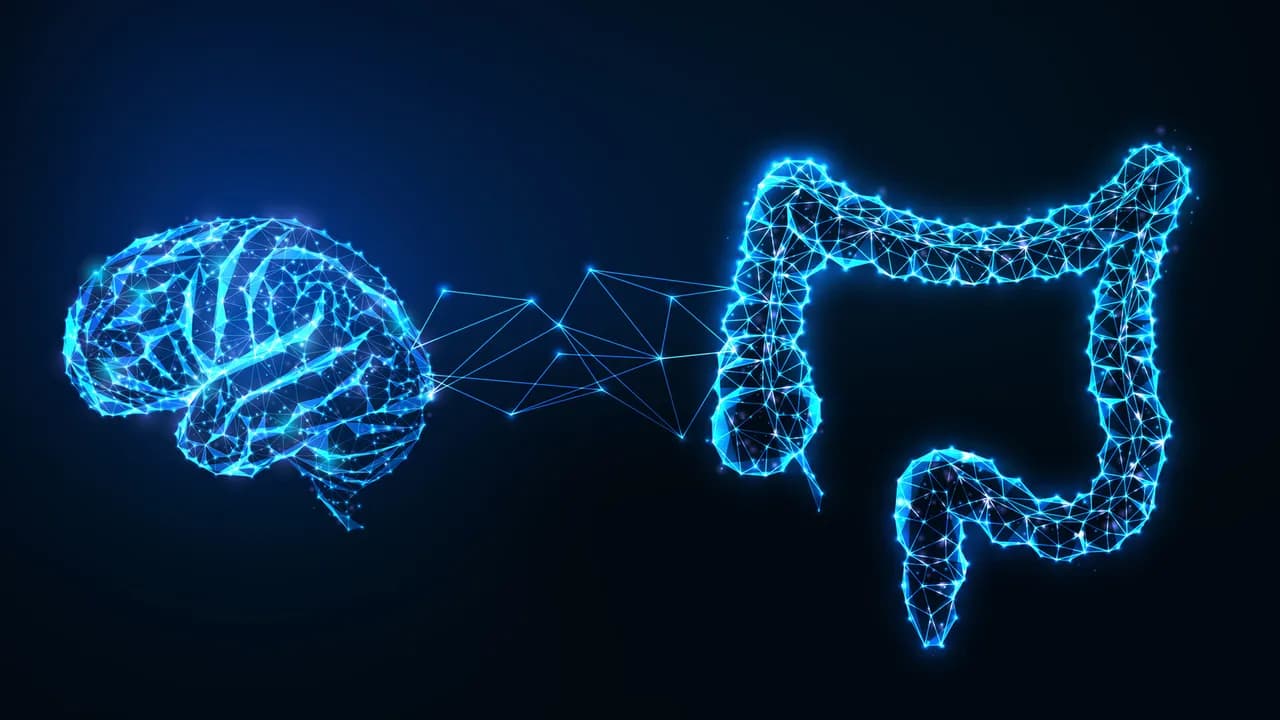
Major depressive disorder (MDD) affects more than 280 million people worldwide, making it one of the most significant global mental health issues. Traditionally, depression has been examined through neurotransmitter imbalance and psychological stress models. However, recent research has shifted toward understanding how the gut–brain axis contributes to neuroinflammation, treatment resistance, and mood regulation. The gut–brain axis refers to the communication network linking the digestive system and the brain. Significantly, growing evidence suggests that the bacteria living in the gut can influence mood, anxiety, cognition, and stress responses.
When the gut barrier becomes weakened or inflamed, it can send distress signals to the brain, activating immune cells and disrupting normal mood regulation. This connection has led to the exploration of how improving gut health might influence depression and other mental health-related symptoms. Questions such as how healthier eating habits or a more balanced gut microbiota might change inflammatory processes and influence mood disorders are central to current research. Even more importantly, it raises awareness of a potential shift in treatment approaches: can gut-based treatments help reduce neuroinflammation and alleviate depressive symptoms?
This study investigates that possibility by examining whether Shouhui Tongbian Capsule (SHTB), a traditional medicine used for constipation and gut health, can improve depressive symptoms through its effects on the gut–brain axis in mice.
Methods
This early-stage study was conducted entirely on adult male mice kept under standard laboratory conditions. Researchers used two well-known mouse models of depression that also produce gut and brain-related changes. In the first model, mice were injected with lipopolysaccharide (LPS). In the second, mice were exposed to unpredictable mild stress through a rotating schedule of stressors such as cold water, restraint, damp bedding, and food deprivation. These stressors are intended to model the effects of long-term psychological stress.
Mice received either SHTB at two different doses or a control treatment. To understand whether SHTB improved depressive symptoms, researchers used behavioral tests that measured pleasure-seeking, despair-like behavior, and anxiety. They also examined the mice’s brains and intestines to look for changes in inflammation, neuronal health, synaptic structure, and gut barrier integrity. Finally, researchers examined gene expression related to neurotransmitters such as serotonin and dopamine to explore whether SHTB influenced molecular pathways linked to mood.
Results
Mice treated with SHTB showed noticeable improvements in depression‑related behaviors. They consumed more sucrose than untreated mice, suggesting reduced anhedonia, and spent less time immobile during the forced swim and tail suspension tests, indicating reduced depressive behavior. In anxiety‑related tests, SHTB‑treated mice explored open areas more freely and spent less time near the edges. Because these improvements appeared in both depression models, the researchers found evidence suggesting that SHTB likely contributed to these behavioral changes rather than changes being due to random variation.
A major finding involved inflammation in the brain. LPS normally triggers strong immune activation, causing microglia and astrocytes to become highly reactive. Imaging showed that LPS greatly increased IBA1‑positive microglia and GFAP‑positive astrocytes in the hippocampus and medial prefrontal cortex. With SHTB treatment, this activation was substantially reduced, and the glial cells appeared less reactive. This indicates that SHTB may help reduce harmful brain inflammation that contributes to depressive symptoms.
SHTB also protected neurons and helped maintain the intestinal barrier, preventing harmful molecules from leaking into the bloodstream. Because intestinal barrier dysfunction and neuroinflammation can worsen mood symptoms, these protective effects may contribute to SHTB’s antidepressant‑like profile.
Limitations
Although the results are promising, this research is still in the preliminary stage. Since the study was conducted only on mice, its results may not translate directly to humans, whose physiology is often more complex. In addition, it is difficult to determine which components of SHTB are responsible for the observed effects, or to determine the extent to which these effects are related to the gut–brain axis. Thus, more research is needed before considering SHTB and other constipation medicines as a treatment option for depression in humans. Still, this opens an opportunity for future gut-based therapy.
Conclusions
This study suggests that Shouhui Tongbian Capsule, a constipation‑focused herbal medicine, may have antidepressant‑like effects in mice by improving both gut health and brain function. SHTB offers a potential multi‑target approach to depression, as it is associated with reducing inflammation, protecting neurons, and supporting the gut–brain axis. Such findings across multiple biological systems emphasize the growing importance of gut health in mental well‑being and provide a foundation for future treatment research.