Introduction
Coffee, energy drinks, tea, and soda are all very popular drinks that contain caffeine. Although many people claim that caffeine helps them stay awake and pay more attention, is this true or merely a consequence of their own perception? What effect does caffeine REALLY have on attention spans, particularly over longer periods of time? Can caffeine increase a person's attention span?
Methodology
The study recruited 34 healthy young adolescents aged 12 to 17 years old. The participants were screened for underlying conditions such as endocrine disorders that may have affected the result. The researchers tested various flavored water flavors, had participants rank them by taste and then picked the most average-ranked flavor. Various drinks were prepared, containing either caffeine and flavored water or a placebo and the same flavored water. There were a total of three groups: one group with a placebo, one with a 1 mg/kg caffeine concentration, and one with a 3 mg/kg concentration. A total of 3 visits were performed, with each patient being in each group exactly once. During each visit, each adolescent was given 5 minutes to drink 500 mL of the prepared solutions. The next 25 minutes was the absorption period, where adolescents were instructed to fill out a questionnaire regarding their regular sleepiness level, and another regarding the amount of caffeine they consumed daily while waiting for their bodies to absorb the caffeine. A 33-minute CPT-IP test was then carried out. The CPT-IP, a test to measure attention span over time, involves rapidly changing numbers and images, with the participant being instructed to click whenever the image matches the very previous one.
Results
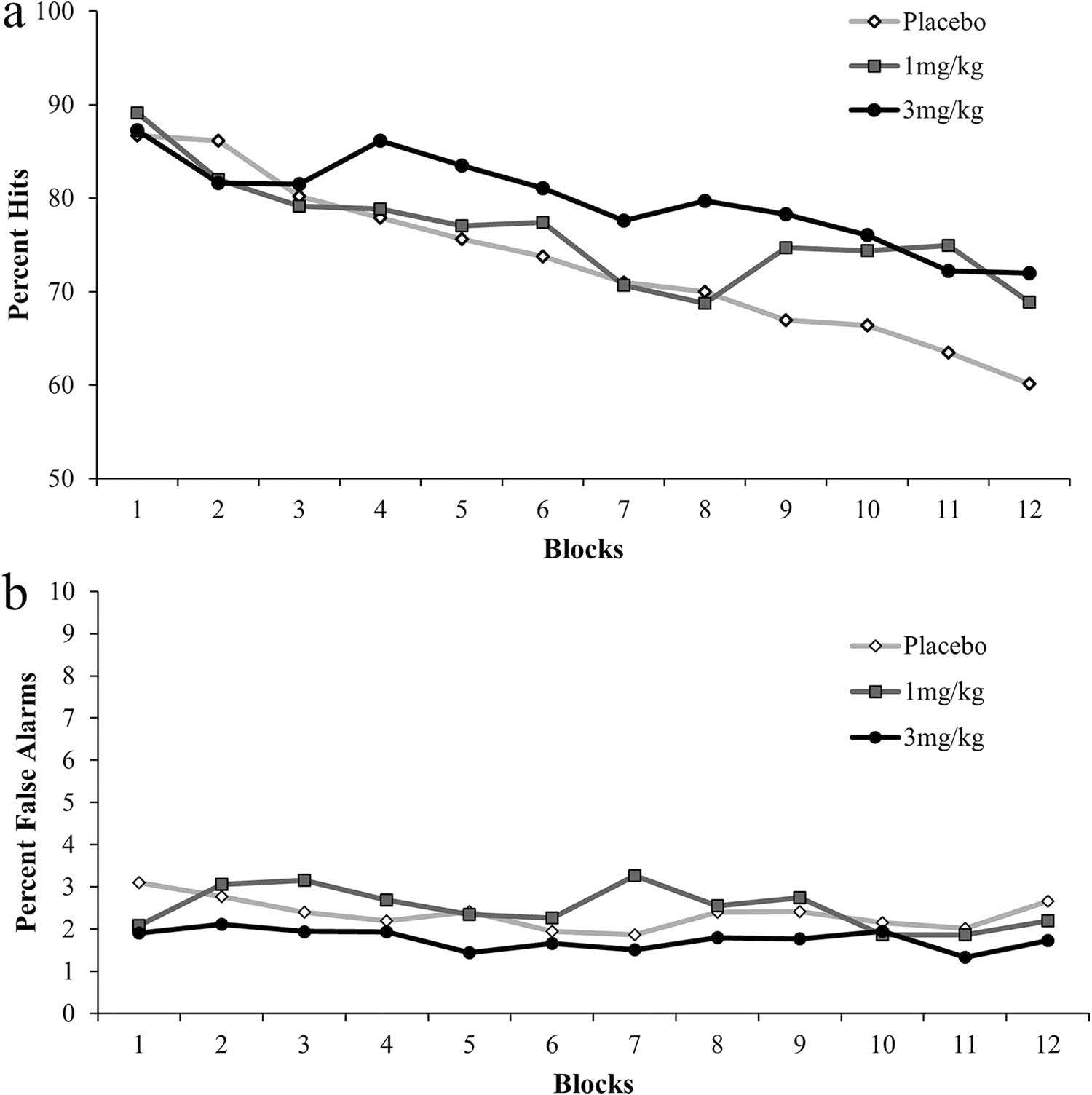
Figure 1.
The 3mg/kg group notably performed better than the other groups in the middle and towards the end of the study. There is not a significant difference in the percentage of false alarms, given the limited number of false alarm presses to begin with.
The study also found that the effect of caffeine in increasing attention spans was more significant in those who reported higher daytime sleepiness in the questionnaire.
Conclusion
The study shows that caffeine has a significant effect in reducing the normal loss of attention over a longer period of time, effectively increasing attention span. Both patients in the 3mg/kg group and 1 mg/kg group do not drop as much in percent hit as those in the placebo group. Furthermore, it shows that caffeine has a paricularly strong effect in those who already suffer from higher levels of daytime sleepiness.
The study is limited by the fact that only adolescents were studied. The same trends may not hold true in the entire population. Furthermore, it only studied the effects of caffeine on attention span, and does not provide definitive answers as to whether caffeine is a healthy, viable choice for teens.