Introduction
In adolescent sports, especially long-term, there has been a clear connection between psychological and social support and athletic performance. Burnout has emerged as a major issue that impacts all aspects of well-being and can be harmful emotionally and physically. Coaches play a central role in the growth of an athlete.
The condition of burnout can be categorized into three dimensions: emotional exhaustion, sport devaluation, and a sense of reduced personal accomplishment. Maintaining a positive coach-athlete relationship is a core aspect of effective coaching. Characteristics such as trust and respect serve as strong factors against athlete burnout. In contrast, poor communication, conflict, or controlling behavior undermines athletes' autonomy and stability. A wider range of factors has been associated with burnout, such as motivation, psychological skills, training environments, and interpersonal relationships. An influx of burnout reports in recent years can be chalked up to a variety of factors, such as increased external pressure or limited coping resources. Most importantly. Identifying how supporting coach-athlete relationships enhances challenge appraisal and reduces burnout can offer guidance for building healthier coaching practices.
Methods
A conceptual research model was used to analyze the actual coach-athlete relationship, challenge appraisal, and athlete burnout. Taking place in South Korea, extreme psychological pressure and the traditional and regional customs surrounding sports make students especially susceptible to burnout.
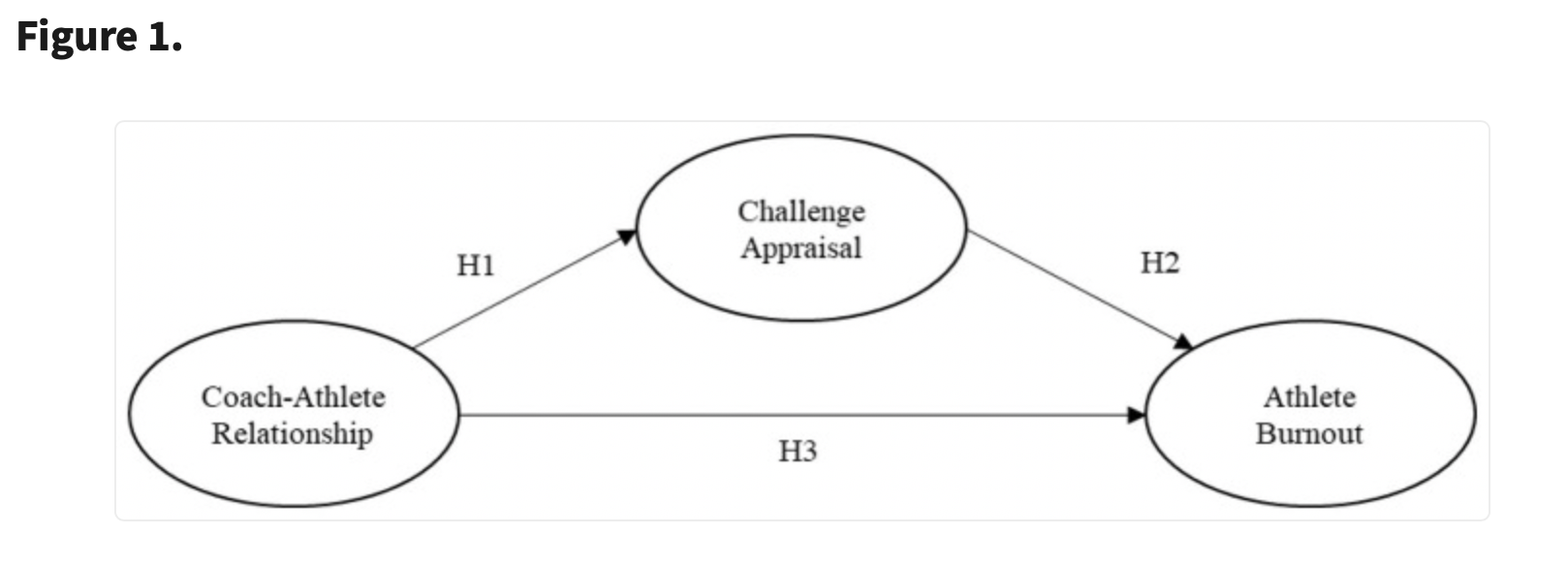
Shown above in Figure 1 is the conceptual research model where the coach-athlete relationship has been identified as the independent variable, with the athlete burnout as the dependent variable and the challenge appraisal as the mediating variable.
323 students were recruited from South Korean middle and high schools. They were aged between 14 and 18, officially registered as a student-athlete with the Korea Sport and Olympic Committee or a school team, actively engaged in training and events, and were excluded if they had less than a year of competitive experience. In the end, 231 males and 92 females across 12 sports were recruited.
The measures for which the relationship was assessed included the Korean version of the Coach-Athlete Relationship Questionnaire (CART-Q), where a higher score shows a stronger coach-athlete relationship. Meanwhile, challenge appraisal was measured with the Student Perceptions of Classroom Quality, where a higher score showed a stronger tendency to perceive sport-related demands as challenges. Another measure was athlete burnout, assessed using the Athlete Burnout Questionnaire.
The study was conducted after the researchers received research ethics education provided by the researchers' affiliated institution. Coaches were sent the questionnaires and provided approval before the survey was conducted. Each student who participated was awarded a gift certificate out of appreciation.
It is important to note the limitations of this study. Considering it takes place in a small part of South Korea, the findings may be different when applied to different athletic cultures around the world, especially when the culture in South Korea differs from many Western cultures. It is also key to note the self-reporting in this survey, which always has a chance for misreporting, whether intentional or not. The fact that those who participated were given a small reward also has to be taken into account.
Results
The study showed that challenge appraisal and the coach-athlete relationship were significant factors in mitigating athlete burnout. This can be seen in the fact that the coach-athlete relationship was shown to have a significant positive effect on athletes' challenge appraisal. Trust, emotional support, and positive interactions can play an important role in how athletes perceive challenging situations in competitive or high-pressure scenarios. Motivation and efficiency can also be impacted, as a heightened psychological sense of positivity and well-being promotes difficult situations as opportunities for growth, rather than stressors. It goes beyond trivial satisfaction, with strategies aimed at strengthening the coach-athlete relationship that can be effective in the prevention of burnout.
Challenge appraisal was also shown to have a significant negative effect on athlete burnout. This indicates that athletes who perceive stressful situations as challenges, rather than threats, are less likely to experience burnout. This is done by evaluating a challenge, such as a practice or game, positively, feeling capable of handling the pressure, maintaining stability, and motivation. Challenge appraisal has both a psychological and physical side. The ability to approach challenges positively can promote adaptive coping strategies and resilience.
The study demonstrated that challenge appraisal partially mediated the relationship between burnout and the coach-athlete relationship. This indicates that a positive coach-athlete relationship can indirectly reduce burnout by fostering high levels of challenge appraisal. A higher confidence in athletes likely results from a higher amount of coach support, which is a common factor in most healthy coach-athlete relationships, which shows why the more positive relationships could be a way that challenge appraisal rises in adolescent athletes. Overall, it is shown that both the coach-athlete relationship and challenge appraisal work together to influence athlete burnout.
Conclusion
The findings show that a positive coach-athlete relationship and high challenge appraisal can lower burnout in adolescent athletes. A good relationship between a coach and an athlete is centered around trust, communication, and mutual respect, which can contribute to a higher challenge appraisal, a mindset that a challenge can be overcome, and that these challenges are simply growth opportunities. Burnout itself is very harsh, especially in adolescence. This is because of the constant lack of psychological and emotional stability that they go through, leading to common burnout in recent times. However, with a good coach-athlete relationship and a good challenge appraisal, it is much easier to deal with athlete burnout.