Introduction
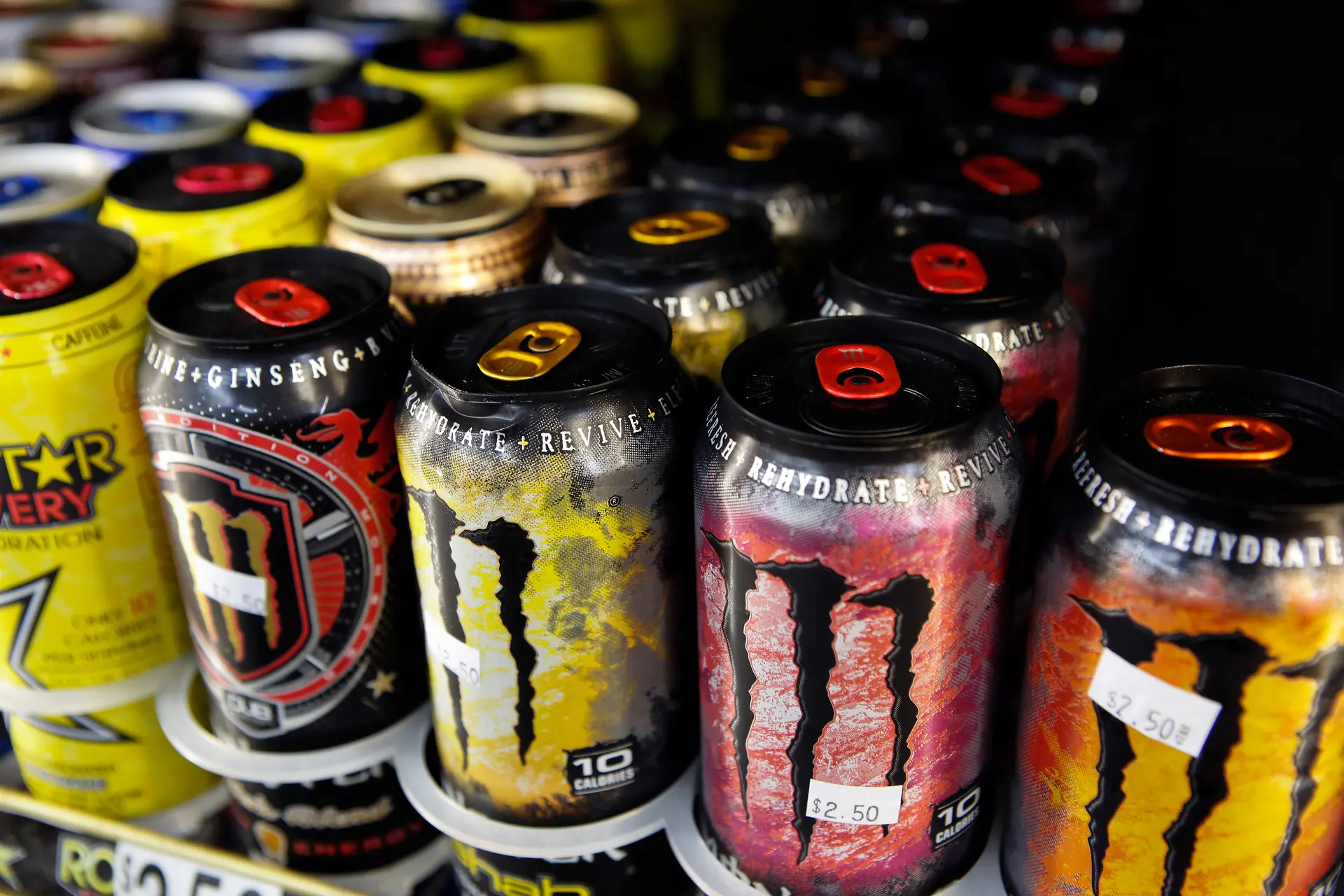
Energy drinks, aimed at providing stimulation, usually contain stimulant compounds like caffeine. Despite its many side effects on the cardiovascular system, people, especially teenagers, generally have a high acceptance of energy drinks.
In recent days, emergencies and health issues have risen more frequently as these beverages continue to grow in popularity with minors. Excessive intake may lead to serious cardiovascular conditions, for instance, cardiac arrhythmia and myocardial ischemia.
This study has a target of investigating the effects of energy drink consumption on heart rhythm and electrocardiographic time intervals in healthy minors by conducting a randomized clinical trial that is randomized.
Methods
Ethical Statement: The study was conducted under legal conditions and with informed consent from all participants and their parents or legal guardians (if they are minors).
Healthy children and teenagers aged between 10 and 18 years were studied in this clinical trial. They all undergo a series of tests to ensure that they are fit for the study.
On two consecutive days, participants received either a commercially available caffeinated energy drink or a placebo drink without the conventional ingredients found in an energy drink. They were randomly assigned to two study groups: group 1 (day 1: energy drink, day 2: placebo) and group 2 (day 1: placebo, day 2: energy drink).
The amount of energy drink provided to each participant was calculated by bodyweight, representing the maximal daily dose of caffeine for minors (3 mg of caffeine per kg bodyweight, as recommended by the European Food Safety Authority).
Heart rate, QTc interval, number of supraventricular (SVES) and ventricular extrasystoles (VES) are measured as dependent variables. They were assessed for time periods after beverage consumption on both days (0-60, 60-120, 120-180, and 180-240 min).
To reduce changes in rhythm, the beverages were administered at similar morning hours on both days. Additionally, participants were asked to stay in the supine position while the examination took place to minimize the effect of physical activity on the dependent variables.
Results and Limitations
Results:
None of the participants demonstrated changes or abnormalities in heart rhythm after beverage consumption. As displayed below, no significant difference in the number of VES between energy drink and placebo consumption on 5% significance level.
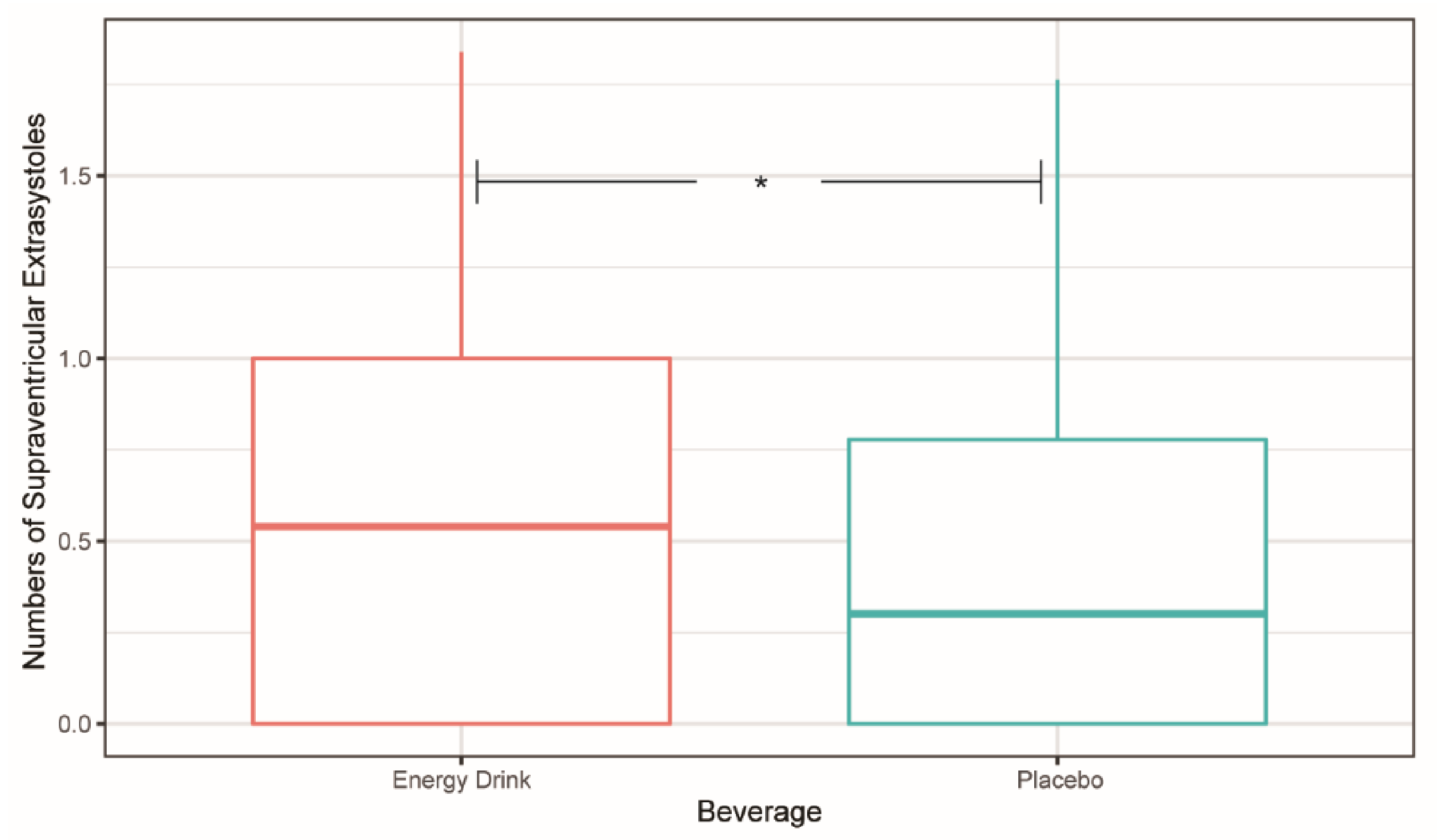
Figure 1: Number of SVES within the first four hours after energy drink and placebo ingestion.
The beverages, over time, had a statistically significant effect on the mean heart rate. Observations of data show that the mean heart rate is lower in the energy drink group compared to the placebo group during the time period of 60-120 min after consumption (a mean difference of 2.71 bpm); while the remaining time periods did not show significant differences in the mean heart rate between the two beverages.
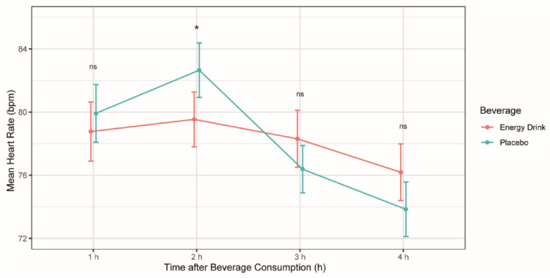
Figure 2: Mean heart rate (bpm) after energy drink and placebo consumption at different time periods.
Note that there is also no statistically significant effect of beverage over time on QTc. For the time period 60-120 min after consumption, the Wilcoxon signed-rank test displayed a significantly lower QT-RR relationship in the energy drink group compared to the placebo group.
However, the consumption of caffeinated energy drinks did result in a significant increase in the total number of SVES compared to the placebo in minors studied in this investigation. This indirectly shows the risks in energy drink consumption, such as blockage or abnormality, causing potential conditions.
Limitations:
Contrasting studies on energy drinks performed in adults, this pediatric study provides no evidence of statistically significant QTc alteration. This could be a result of the lower caffeine dosage administered in this study as compared to adults.
The relatively low number of participants (n=26) also plays into the limitation of the significance of this study. The blinding quality could also be varied, though proven to be appropriate. Additionally, minors with cardiovascular conditions were not included in this study. Thus, this study only assessed the effects of energy drink consumption on a very limited population.
Conclusion
Based on the result of measurements on the mentioned parameters, acute energy drink consumption was associated with a significantly increased number of SVES in healthy children and teenagers. Additionally, a decrease in heart rate could also occur as a result. This suggests that minors who have heart rhythm conditions may be at risk of developing malignant dysrhythmias after consuming energy drinks. For healthy minors, it is still suggested that energy drink consumption remain minimal and restricted to a maximum of 3 mg of caffeine per kilogram of body weight.