
Introduction
Cognitive impairment is a loss of memory, learning, spatial positioning, reasoning, judgment, and overall brain function that unfortunately often comes with age. Over 30% of people at the age of 80 are described as "cognitively impaired". Furthermore, as often as 25% of the time, cognitive decline can lead to neurological diseases such as alzheimer's or parkinson's that can have devastating effects. Recently, vitamin B12 has come into the spotlight for its potential to slow this decline or even boost cognitive health. However, are these effects truly significant, or simply a red herring?
Methodology
The study followed elderly Chinese patients at a university hospital who showed early signs of psychological decline, as indicated by prospectively administered MMSE and MoCA tests (see the "results" section for more details on the tests). 166 participants were found to be eligible, and that number was narrowed down to 115 patients via factors such as willingness to participate. The average age was roughly between 60 and 61. The 115 participants were split into a vitamin B12 group and a control group, with 58 and 57 people, respectively. During the first seven days of the 6-month experiment, 500 mg of vitamin B12 was administered intramuscularly to participants in the vitamin B12 group, followed by oral administration of 0.25 mg of cobamamide. For the rest of the 6 months, methylcobalamin was administered daily at a dose of 0.5 mg. At the end of the 6 months, participants took the MMSE and MoCA tests again. Blood was also drawn at the start and end of the study to compare vitamin B12 levels, as well as folic acid (vitamin B9, elevated in B12 deficiencies) and tHcy.
Results
The MMSE test measures general cognitive function, with seven specific subsections: orientation, registration, attention and calculation, recall, language, and visuospatial function. Each section is scored individually with a maximum score ranging from 1 to 10, and the entire test is scored out of 30.
Similarly, the MoCA test measures overall cognitive function, but only analyzes six categories: short-term memory, visuospatial function, executive function, attention, concentration, working memory, language, and orientation.
The results of the study are as shown:
Table II. The levels of blood biomarker parameters at baseline and after the sixth month of supplementation with vitamin B12 or control
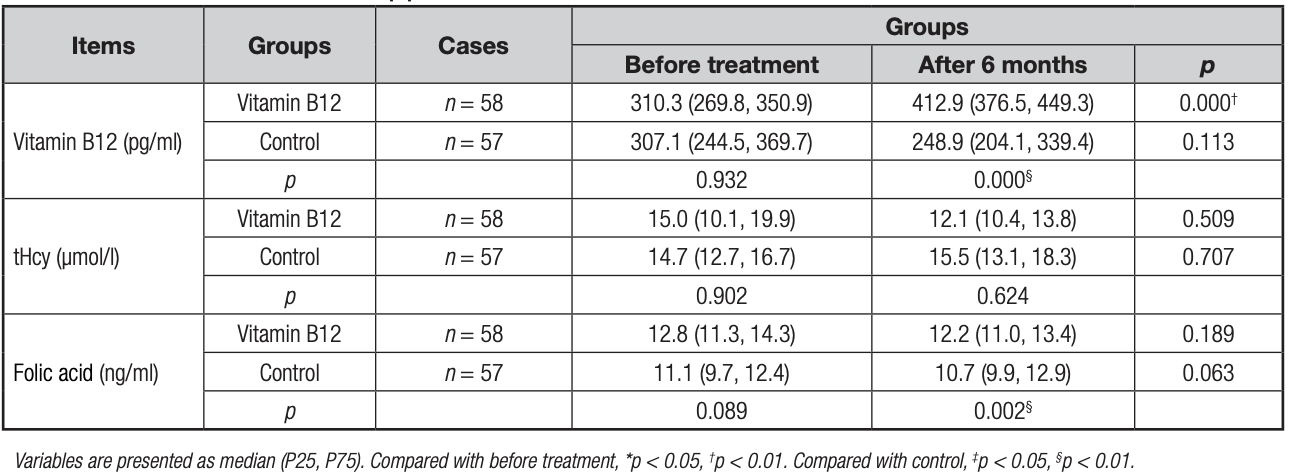
Table III. The neurocognitive test scores at baseline and after the sixth month of supplementation with vitamin B12 or control
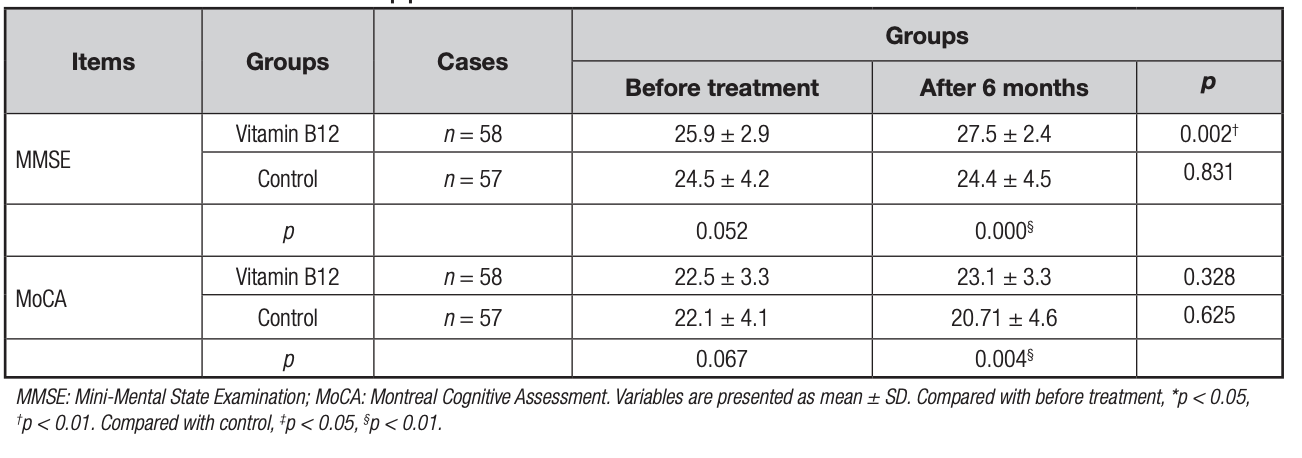
Table IV. Changes of MMSE scores at baseline and after the sixth month of supplementation with vitamin B12 or control
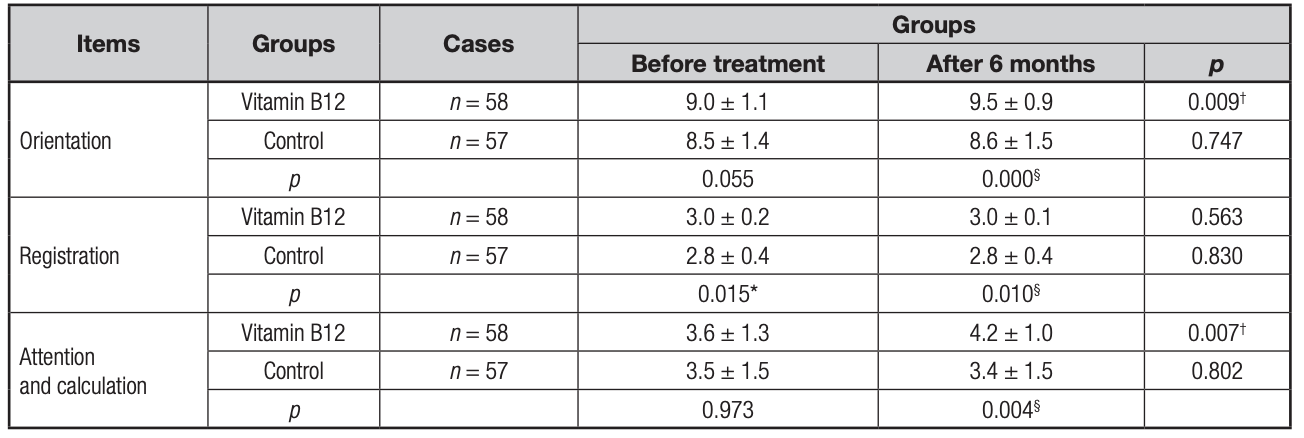
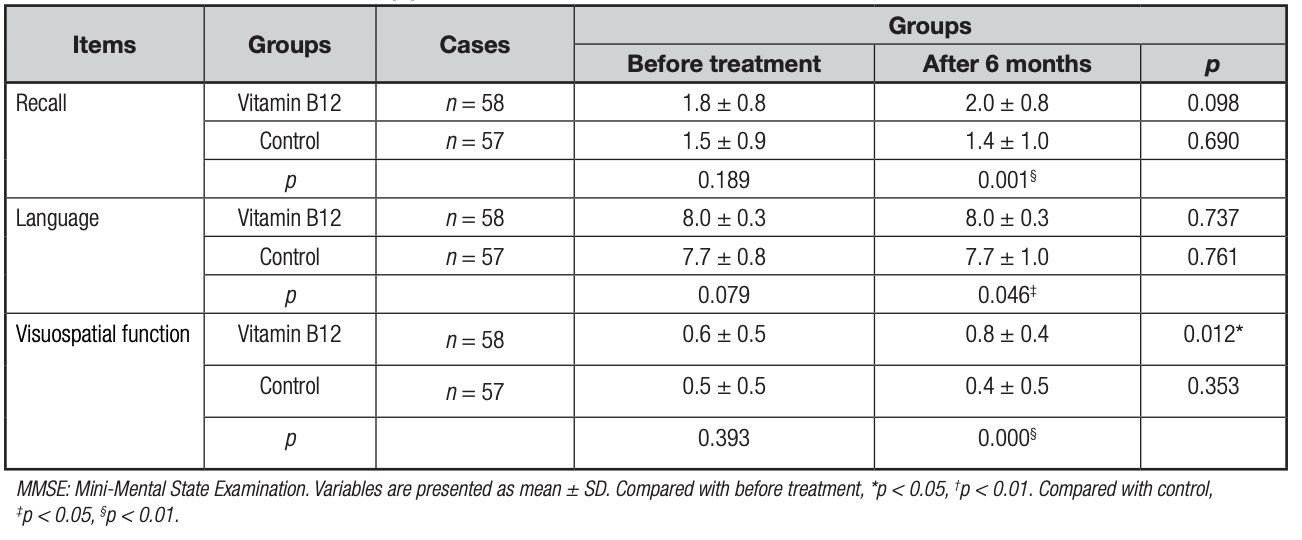
In Table II, the numbers describe the mean value of the biomarkers, and the numbers in parentheses describe the lowest and highest values measured. Table II confirms that the Vitamin B12 treatment actually had a significant effect on the patients.
Table III shows that there was a significant increase in MMSE scores in the vitamin B12 group, but no significant change at all in the control group. The Vitamin B12 group also saw a small increase in MoCA scores, while the control group saw a decline over the 6 months. This points to the conclusion that vitamin B12 can improve cognitive health and slow decline.
Table IV separates score changes into distinct categories for the MMSE test. It indicates that vitamin B12 supplementation had the most significant effects on orientation, attention, calculation, recall, and visuospatial function.
Conclusion
The conclusion is that vitamin B12 has significant potential for increasing cognitive abilities. The B12 group saw much better scores in both MMSE and MoCA after the 6-month period.
However, the study is not without limitations. The sample size could still be larger, and some of the results could be caused by the fact that a university hospital may tend to house patients with higher education. In the future, more randomized, larger-scale, and longer research should be done to confirm the effects found in the study. 6 months is not long enough to definitively prove the long-term effects of vitamin B12.