Introduction
Psychological conditions are considered a major reason for decreased life quality, measured in depression, stress, and anxiety. Genetics, exercising routine, diet and nutrition, are all contributors to the development of emotional issues, but food has shown to be another significant impact on one's mood, either positively or negatively.
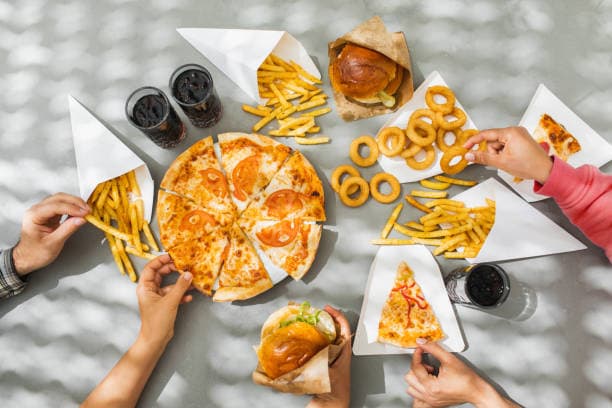
As more and more people consume large amounts of junk foods, it becomes increasingly important to investigate the effects of these ultra-processed foods on humans. This study examines the relationship between junk food consumption and mental health disorders in adults through a systematic review of published studies.
Methods
Studies are found through a systematic literature search conducted in PubMed, ISI Web of Science, Scopus, Cocharane, Google Scholar, and EMBASE, and consists of previous studies investigating the effect of junk food on mental health up to July 2023. All of these publications were observational studies conducted in adults. Letters, comments and reviews were excluded from the studies list.
For each study, an organized sequence of information was extracted. This includes the author, study background, study design, country, gender, sample size, etc. Then, using the Newcastle-Ottawa Scale (NOS), the quality of these studies were evaluated.
The results of quantitative synthesis are presented as hazard ratios or odds ratios and in 95% confidence intervals. Chi-square-based Q-test was also used for the assessment. Publication bias was measured using Begg's test or Egger's test.
Results and Limitations
Results:
1745 papers are found through the initial search, only 69 of them remained for more detailed assessment. Finally, 17 articles satisfy the eligibility requirements for inclusion in the systematic review. These 17 studies evaluated a total of 159,885 participants, with most of them being cross-sectional.
Most of the studies concluded at least a single significant link between junk food consumption and psychological outcomes. Four of them demonstrated the association of junk food consumption with increased stress, with the further pooling results showing that junk food consumption significantly increases the odds of depression by 15%.
Limitations:
Though comprehensive and specific, this study has limitations such as inconsistencies in its design. Differences in the season, gender, age range, and control protocols are all factors influencing the experiment outcomes. Although most of the included work do present the association between junk food consumption and mental health disorders, the strength of this association could vary significantly between studies.
Conclusion
This review supports that the consumption of junk foods are associated with poorer mental health outcomes in adults. Further longitudinal studies are needed to better understand the direction and effect size of this habit on psychological disorders.
Therefore, it is suggested that while eating limited amounts could seen to temporarily ease your stress, it's still the best to have a healthy, balanced diet, as comfort foods may be harming both your mind and body more than you think.