Introduction
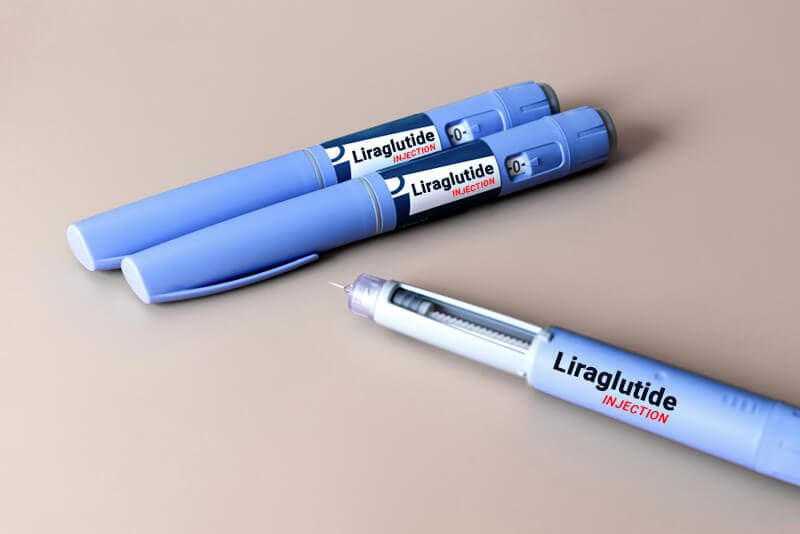
In recent years, “GLP-1” medications have been not only in medical journals but also in mainstream media. Glucogan-like peptide 1 (GLP-1) receptor agonists were initially developed to treat type 2 diabetes. The scientists also discovered that GLP-1 analogues caused weight loss in many patients. Eventually, that discovery lead to multiple GLP-1 receptor agonists gaining FDA approval for weight loss. The effects of GLP-1 in cardiovascular disease, however, remain uncertain. In this trial, the authors investigated the effects of liraglutide, one of the GLP-1 receptor agonists currently on the market, on the cardiovascular outcomes.
Methods
This was a multicenter, double-blind, controlled clinical trial. 9,340 patients with type 2 diabetes were randomly assigned to receive liraglutide or placebo. Inclusion criteria were: patients with type 2 DM with HgA1c level of 7% or more AND 50 y/o or older with at least one CV coexisting condition or 60 y/o or older with at least one CV risk factor (predetermined by the authors). The median follow-up was 3.8 years in each group. The primary outcomes were the first occurrence of death from CV causes, nonfatal myocardial infarction (MI), and nonfatal stroke. The authors hypothesized that liraglutide would be noninferior to placebo.
Results
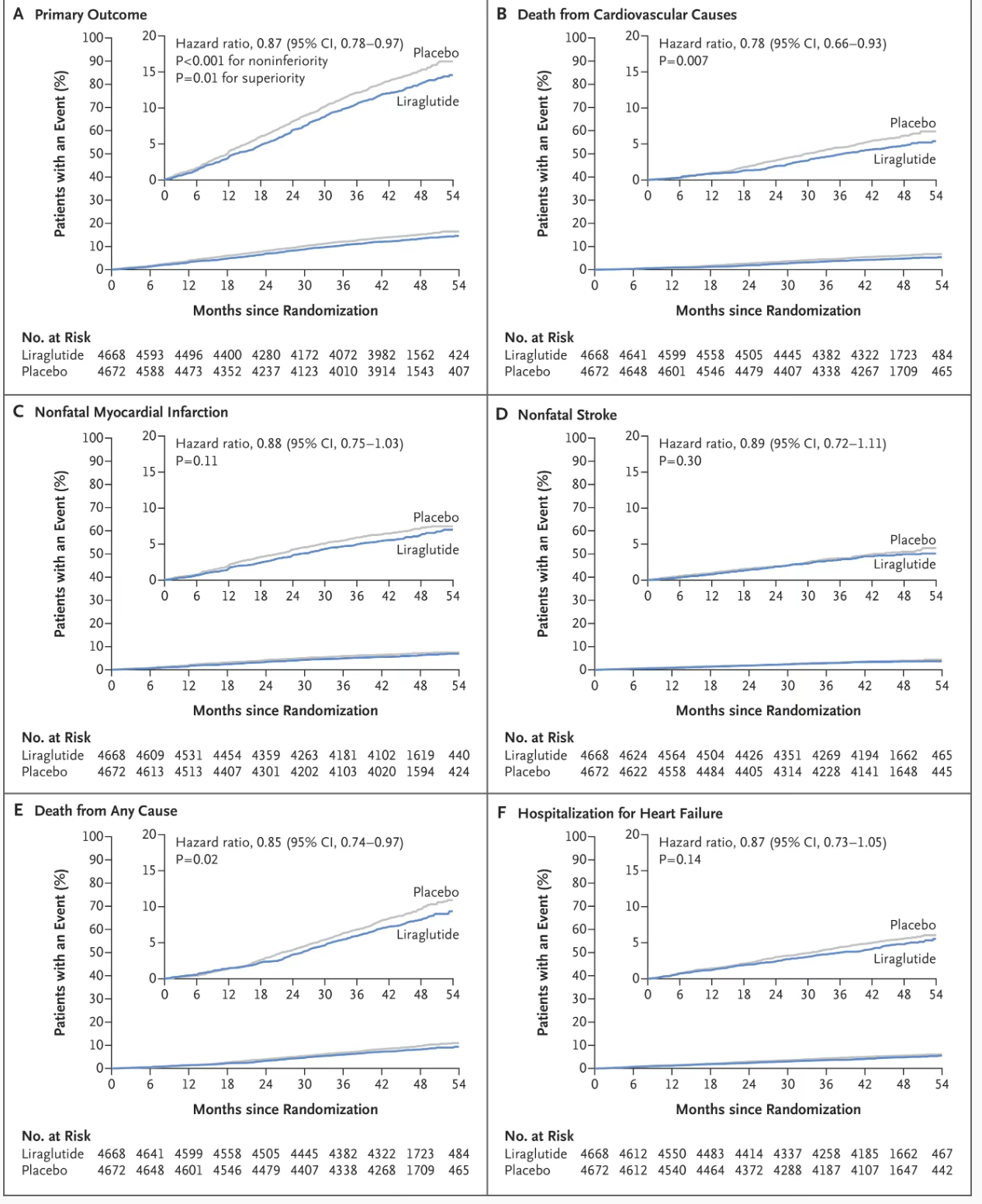
The primary outcome occurred in fewer patients in the liraglutide group (13%) than in the placebo group (14.9%) (P<0.001 for noninferiority; P=0.01 for superiority). Death from CV events occurred in fewer patients in the liraglutide group (4.7%) vs the placebo group (6%). The nonfatal MI and stroke were lower in the liraglutide group but it was not statically significant.
Conclusion
In this trial, patients who were treated with liraglutide had few CV outcomes (death, nonfatal MI and nonfatal stroke) than the placebo group. Prior trial such as ELIXA (Evaluation of Lixisenatide in Acute Coronary Syndrome) trial didn’t show CV benefits. Other trials with different class of diabetes medications such as insulin, thiazolidinediones and DPP-4 inhibitors also didn’t show significant CV benefits. The strength of this trial was the large number of patients in multiple centers in different countries. It was also a blind-blinded trial. The weakness of this study, as the authors suggested, was the short follow up of 3.5 to 5 years. Also, the patient popular was a high risk group with HgA1c of 7% or higher and existing CV risk factors. Therefore, it is unknown that the observed benefits will be seen in patients with lower risk.