Introduction
Whether you constantly strain your fingers attempting to perfect playing an instrument, seeking to find the right pitch in order to sing a song, or maybe you are just listening to a song in complete peace. One thing is undeniable: We all love music. According to the Nielsen Music 360 report, roughly 90-93% of the population enjoys regularly listening to music. But what exactly makes listening to music so addictive and soothing? This study will focus on the effect of music as a stimulant by using EEG neurofeedback.
Methods
Scientists measured the psychological effects of music by having subjects participate in EEG. EEG is a non-invasive brain therapy that monitors electrical brain activity in order to train the brain to regulate properly. One of the types of electrical brain activity is called a frequency band. Frequency bands that are composed of frequencies 8 to 13HZ are considered an "Alpha band". Scientists then divided subjects into groups to evaluate which type of music produced more alpha bands: a subject's favorite type of music, or relaxing music?
Scientists found the results to have a big contrast between self-selected music and music deemed "relaxing" by professional musicians.
At first, they found that self-selected music triggered slightly more alpha waves in the brain than music that was deemed "relaxing" by professionals. This was because when the subjects listened to their song of choice, it triggered strong neural synchronization between the process of listening to the music and the hippocampus.
This personalized connection allowed the subject's favorite type of music to continuously provoke deep emotional and memory-based responses.
However, with time, these results changed. Within two weeks, the brain began to pick up significantly more alpha waves whenever the subject listened to "relaxing music".
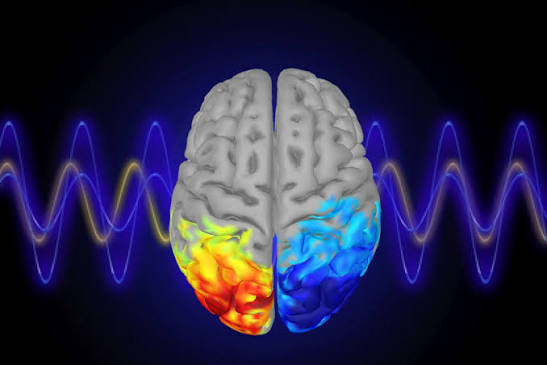
Week 1 Alpha Waves: F = 4.59 Week 2 Alpha Waves: F = 18.87
Conclusion
The statistical difference grew much bigger from week one to week two, proving that sustained exposure to relaxing music strengthened alpha wave synchronization over time. Therefore, it was more effective in triggering brain activity and driving deeper relaxation than self-selected music.