Introduction
The brain has its own cells that clean up waste in the brain; one of these cells being Microglia cells. In short, they eat weak synapses, or weak connections in the brain, so strong connections can work better. The problem is that the researchers know a gene named INPP5D, which makes a protein in the Microglia cells, that causes AD, or Alzheimer's disease. During this study, they wanted to figure out what this protein does in the brain and how it affects the brain during cognitive development.
Methods
Researchers bred mice, and in one group of mice, they turned off the SHIP1 protein that exists in the Microglia cells. They did this with mice that were babies and with adult mice as well. Researchers used microscopes to look at the 3D structures of Microglia and measured how much synaptic material they were eating away. Additionally, they also sequenced the RNA of the cells and tested which genes and pathway signals switched on or off inside the brain's proteins.
Results and Images
Researchers found that SHIP1 is naturally high in babies' brains and is also healthy in adult brains. Without the SHIP1 protein, the Microglia cells would eat away complement proteins like C1Q, which mark weak brain connections. Because the researchers deleted the gene to stop the Microglia cells from getting out of control, it ended up eating away at the brain connections inside mice's brains, especially for those that were younger. Adult mice were not affected.
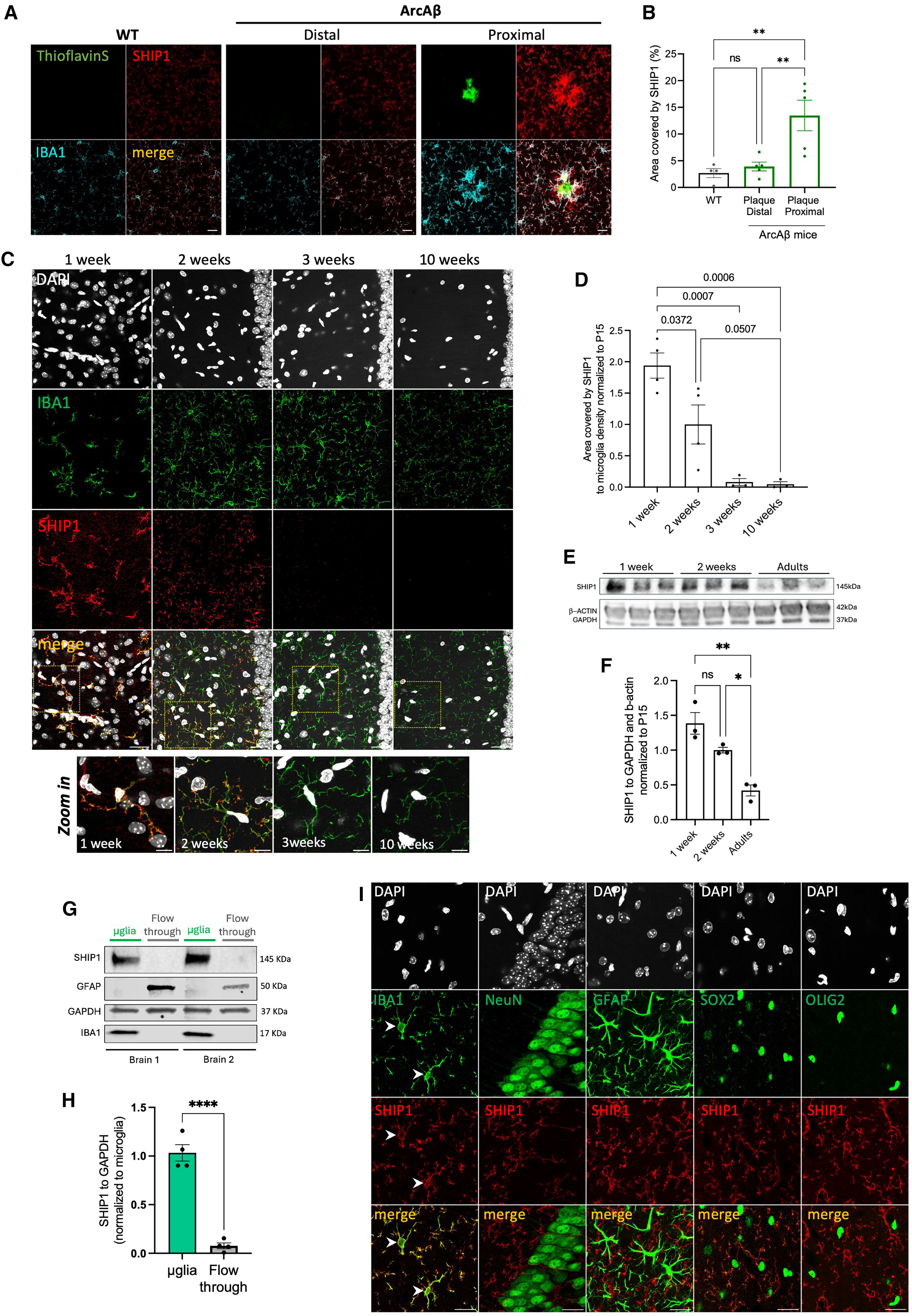
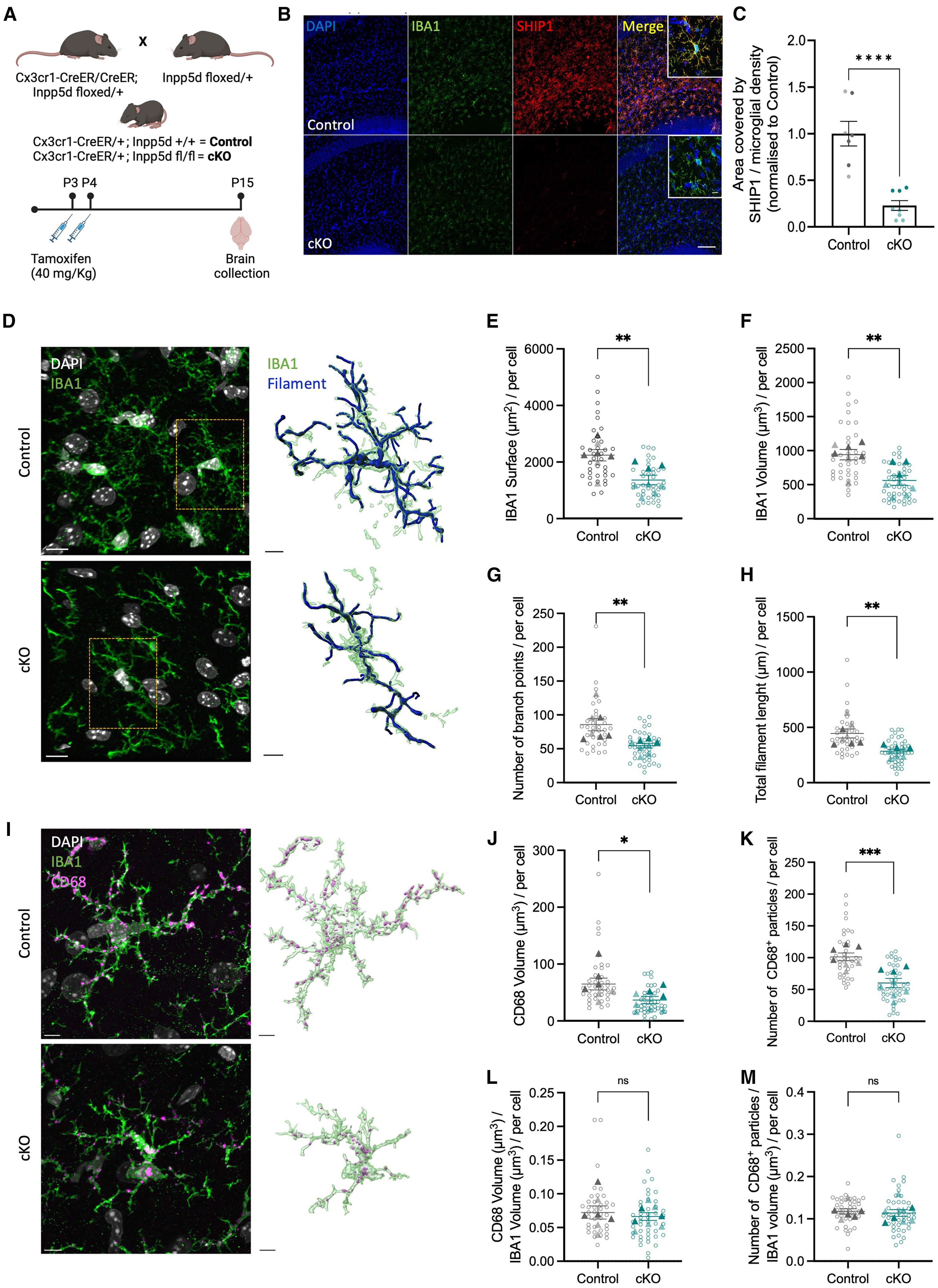
These images show what is occurring in mice's brains when the Microglia cells are altered. In the first image, models A-C show how researchers turned off the SHIP1 protein in mice as soon as they were born. By day 15, these mice had low levels of SHIP1 compared to the other control group of mice. Models D-H show how, without SHIP1, the Microglia cells shrink, and their structures are affected. Lastly, in models I-M, researchers tested the levels of CD68, a lysosome marker that marks cellular waste. While the amount of CD68 dropped, so did the cells' size.
Limitations
When researchers turned off the SHIP1 protein, they also affected other immune cells in the brain. So, it is difficult to isolate the Microglia cells alone. Even though most findings in mice were verified, this study in humans has not been conducted.
Conclusion
The SHIP1 protein is vital during early life stages, as it stops the Microglia cells from eating away synapses during early cognitive brain development. Altering the balance of genes, cells, and proteins will only cause permanent memory issues during the later stages of development, which is how Alzheimer's can occur.