Introduction:
When most people consider cancer screening, they think of conventional methods such as blood tests or diagnostic imaging; nevertheless, scientists are currently investigating a surprising source of signs of malignancy—the bacteria that exist in our gut.
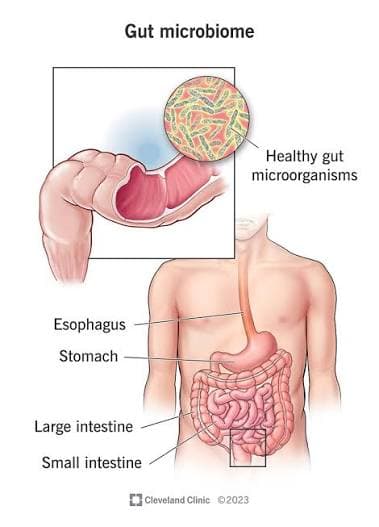
The gut microbiome consists of the bacteria that live in our digestive tract and interact with the human body; it has been found that the makeup and abundance of these bacteria can differ according to a person's condition.
Then might the bacteria residing in us be used to detect colorectal cancer?
Colorectal cancer is a type of cancer which develops in the colon or rectum; it can originate in benign growths known as colorectal adenomas and may be dangerous to life. It is essential to be able to detect these growths and malignant tumours if patients are to be diagnosed as early as possible after the onset of the condition. In the present study, the scientists examined whether differences in the gut microbiota could be used in conjunction with machine learning algorithms to classify people who have colorectal adenoma and cancer.
Methods:
The researchers looked at five datasets that were available to the public and included information on the gut microbiota of people from North America and East Asia. The four datasets altogether used to construct the machine learning model provided data for 1,181 individuals, 454 of whom were classified as healthy, 373 had non-advanced adenomas, 197 had advanced adenomas, and 157 had colorectal cancer.
To analyze the variety and abundance of bacterial species in the gut, the researchers used 16S rRNA sequencing. When the results from the various categories were compared, 109 operational taxonomic units were identified and then used in the later analyses. A predictive model was developed by means of a random forest classification algorithm, with this algorithm looking at patterns among dozens of variables, in order to tell the difference between healthy people, those who had colorectal adenoma, and those who had colorectal cancer.
A score based on microbial factors was also developed so that it could be used to estimate an individual's chance of developing colorectal cancer. Moreover, an independent validation dataset was employed to make sure that the model was able to generalize its results and to detect patterns that were similar in different datasets.
Results and Limitations
Results:
They discovered that the gut microbiota in people who have colorectal cancer differs both in quality and amount from that of people who do not have the condition.
Figure 1, which is given below, shows the results of a principal-component analysis (PCA). The graph showed that the microbiota of the individuals in the healthy control group (CON) were in general different from that of people who had colorectal adenomas (AD) or colorectal cancer (CA). In the PCA plot, samples with similar compositions tended to group.
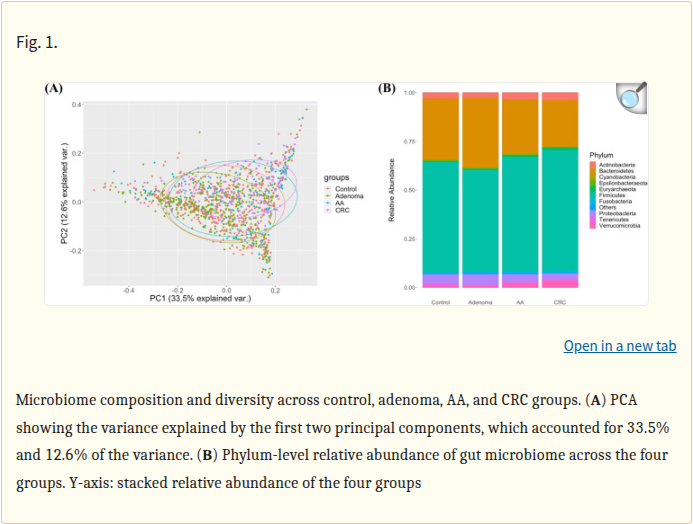
The first two components of the PCA accounted for 33.5% and 12.6% of the variance, respectively. Notably, differences were observed in the relative abundance of certain bacterial genera, including Fusobacterium and Porphyromonas, with this abundance appearing to be higher in patients with CA.
On the other hand, the researchers stressed that it was not the case that one bacterial species was responsible for these differences, pointing out the need to look at the interactions among dozens of variables. The machine learning model showed very good ability in telling apart CON, AD, and CA, with an area under the ROC curve (AUC) of 0.90 when validated internally and 0.82 when validated externally. An AUC near 1 shows that the model has strong discriminatory power.
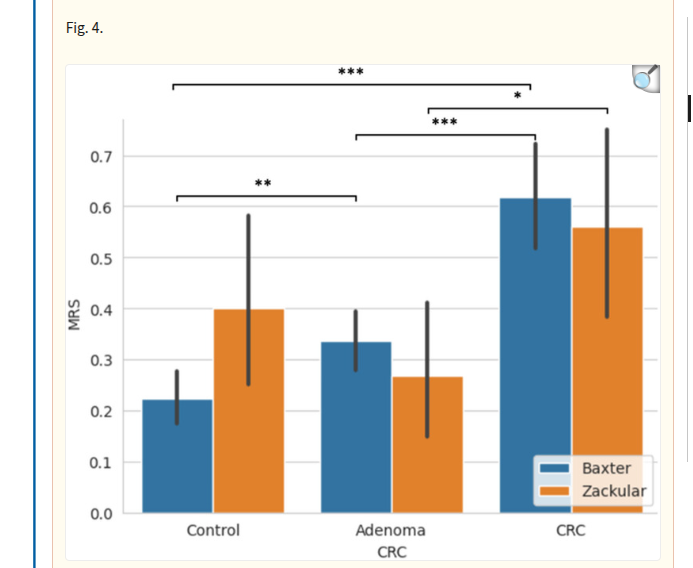
The microbial risk score shown in Figure 4 seems to work well in separating healthy people from those with CA. In each of the datasets, the individuals with CA had considerably higher risk scores than those in the CON group. Furthermore, the score was found to be consistently higher in the CA group than in those with AD. These results indicate that although there are differences among the groups, it may be more useful to examine how the microbiota varies from a healthy reference rather than looking for a specific "cancer bacterium."
Limitations:
The study had several limitations.
The researchers instead used existing data sets and did not carry out a clinical trial, so the model's performance has not yet been validated in a real-world situation. Moreover, the results do not take into account a highly diverse population, and further research is required to make sure that the model functions across different races and ethnic groups.
The impact of the gut microbiome is complicated and can be influenced by a variety of factors such as diet, genetics, and medication; hence,e the fact that there are associations does not mean that these bacteria cause disease or that dysbiosis directly results in colorectal cancer.
The researchers also said that although their model could be used as a powerful tool for understanding the role of the gut microbiota in health and disease, further research is required before it can be used as a diagnostic tool.
Conclusion
Although the findings are extremely exciting, it does not mean that these bacteria can be used as a method for screening colorectal cancer; at the moment, all we know is that there are associations, not that there is causation.
If future investigations show that these associations are consistent, the gut microbiome could provide a revolutionary method for the early detection of cancer.